

How Your Roof Affects Solar Panel Efficiency
Solar panels can be a great way to lower your electric bill and make your home more energy independent. But not every roof produces solar power the same way.
The efficiency of a roof-mounted solar system depends on several factors, and many of them start with the roof itself.
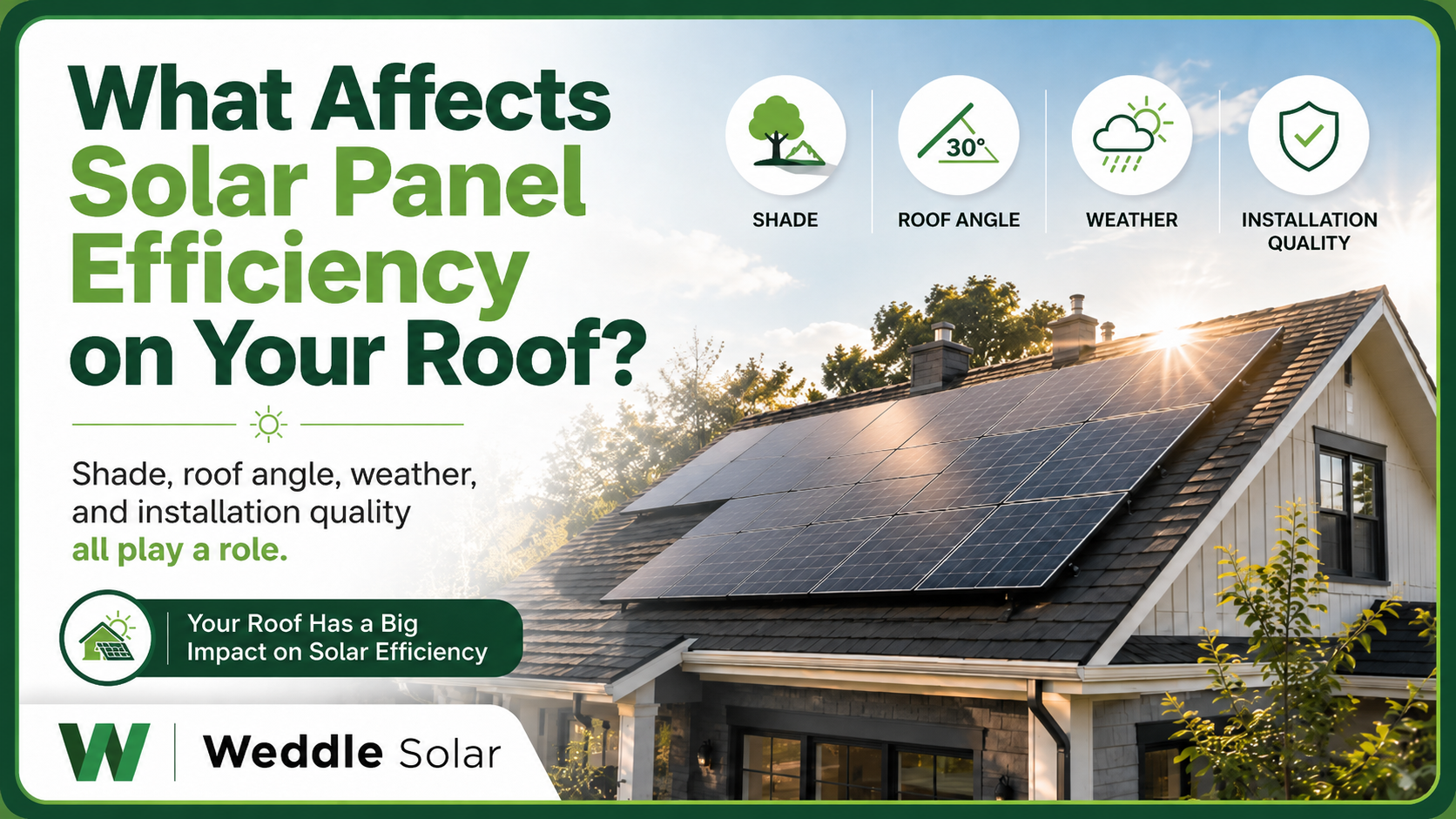
1. Sun Exposure
The more direct sunlight your panels receive, the more energy they can produce.
South-facing roof sections usually perform the strongest, but east- and west-facing panels can still be very effective depending on your home, energy usage, and system design.
2. Shade
Even small amounts of shade can reduce solar production.
Common shade sources include:
Trees
Chimneys
Dormers
Neighboring homes
Roof vents
Utility poles
Seasonal sun angle changes
That’s why a professional solar design should look at your roof throughout the day, not just at one moment in time.
3. Roof Pitch and Angle
The slope of your roof affects how directly sunlight hits your panels.
A roof that is too flat or too steep may still work well, but the system needs to be designed around that angle to get the best production possible.
4. Roof Layout
Not every part of the roof is usable for solar.
Hips, valleys, skylights, vents, and roof edges can all affect where panels can be placed. A clean, open roof section usually allows for a more efficient layout.
5. Temperature
Solar panels love sunlight, but extreme heat can reduce efficiency.
That means a bright, cool day can sometimes produce better results than a very hot summer day. Proper panel placement and airflow help the system perform as well as possible.
6. Weather and Seasons
Cloud cover, snow, storms, and shorter winter days can all affect production.
The good news is that solar systems are designed with seasonal changes in mind, so your yearly production estimate accounts for normal weather patterns.
7. Dirt, Dust, Leaves, and Debris
Anything that blocks sunlight from reaching the panels can lower production.
Rain helps rinse panels naturally, but pollen, dust, leaves, bird droppings, or heavy debris can still impact performance over time.
8. Equipment Quality
Panel quality, inverter performance, wiring, and system design all matter.
Top-tier solar panels and properly designed electrical components help your system turn more sunlight into usable power.
9. Roof Condition and Installation Quality
Solar panels live on your roof, so the roof needs to be ready for them.
A roof that is near the end of its life may need attention before solar is installed. Proper waterproofing, mounting, and flashing are also critical to protect your home long-term.
That’s where Weddle Solar is different. We bring more than 25 years of roofing experience to every solar project, with a roofing-first approach designed to protect your home and your investment.
Want to Know How Solar Would Perform on Your Roof?
Our team can review your roof, shade exposure, layout, and energy goals to help determine whether solar panels are a good fit for your home.