

How Solar Panels Actually Work
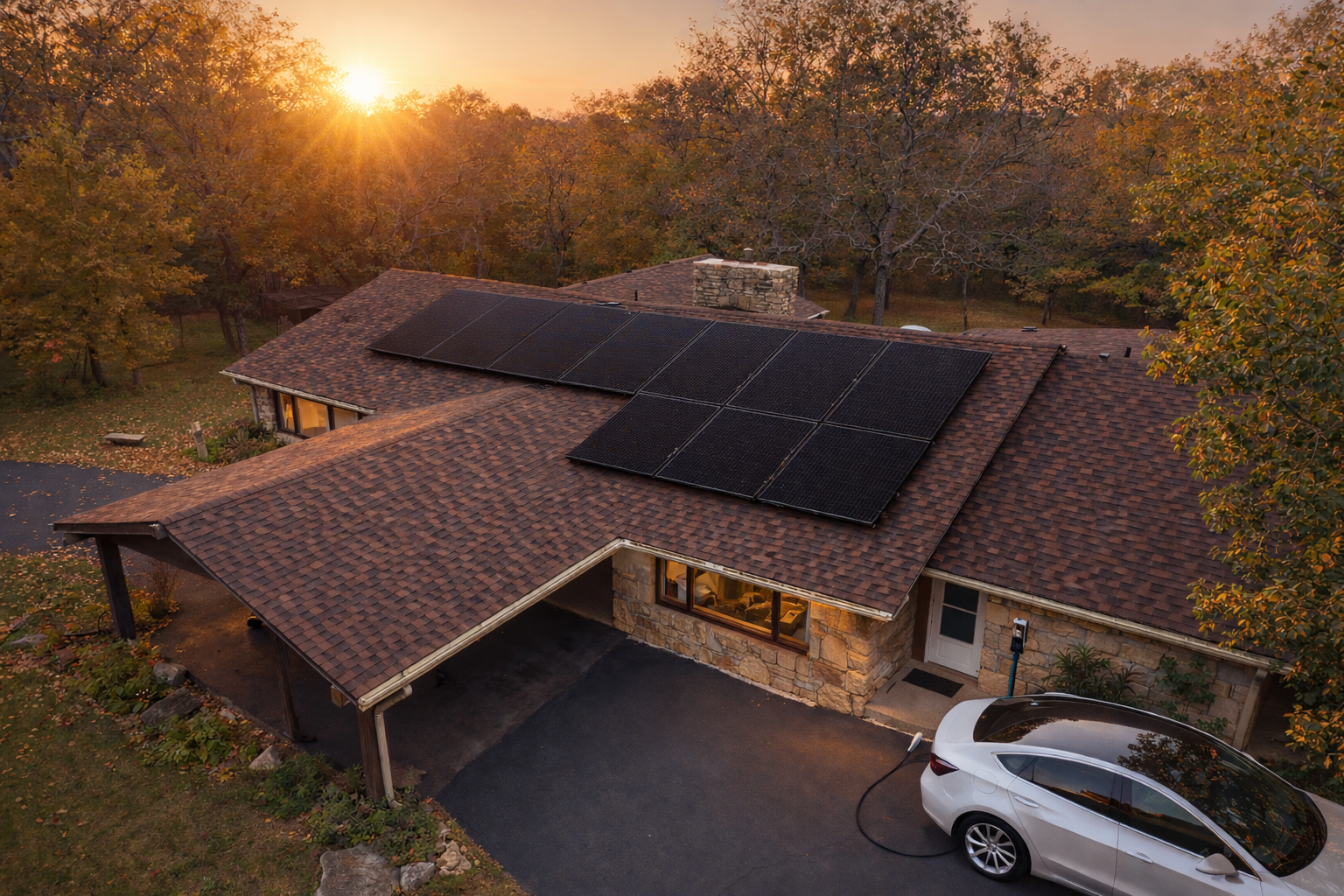
Ever wondered how sunlight can reliably power your home here in Manhattan, Kansas?
It might sound high-tech—or even uncertain at first. But solar is actually one of the most dependable energy systems available today. It’s built on simple, proven science, and it works the same way every single day the sun comes up.
If you like to understand how things work before making a decision, let’s walk through it clearly.
What Solar Panels Actually Do
Solar panels turn sunlight into electricity.
Think of it like rain hitting your roof.
Your roof catches water and directs it where it needs to go.
Solar panels do the same thing—but with sunlight instead of water.
And just like your roof works every time it rains, solar panels are designed to work consistently whenever sunlight is available.
What Sunlight Really Is
Sunlight is made up of tiny packets of energy called photons.
You can think of photons like small bursts of energy arriving at your roof every day.
They’re predictable. They show up every morning. And that consistency is what makes solar such a reliable energy source.
How a Solar Cell Works
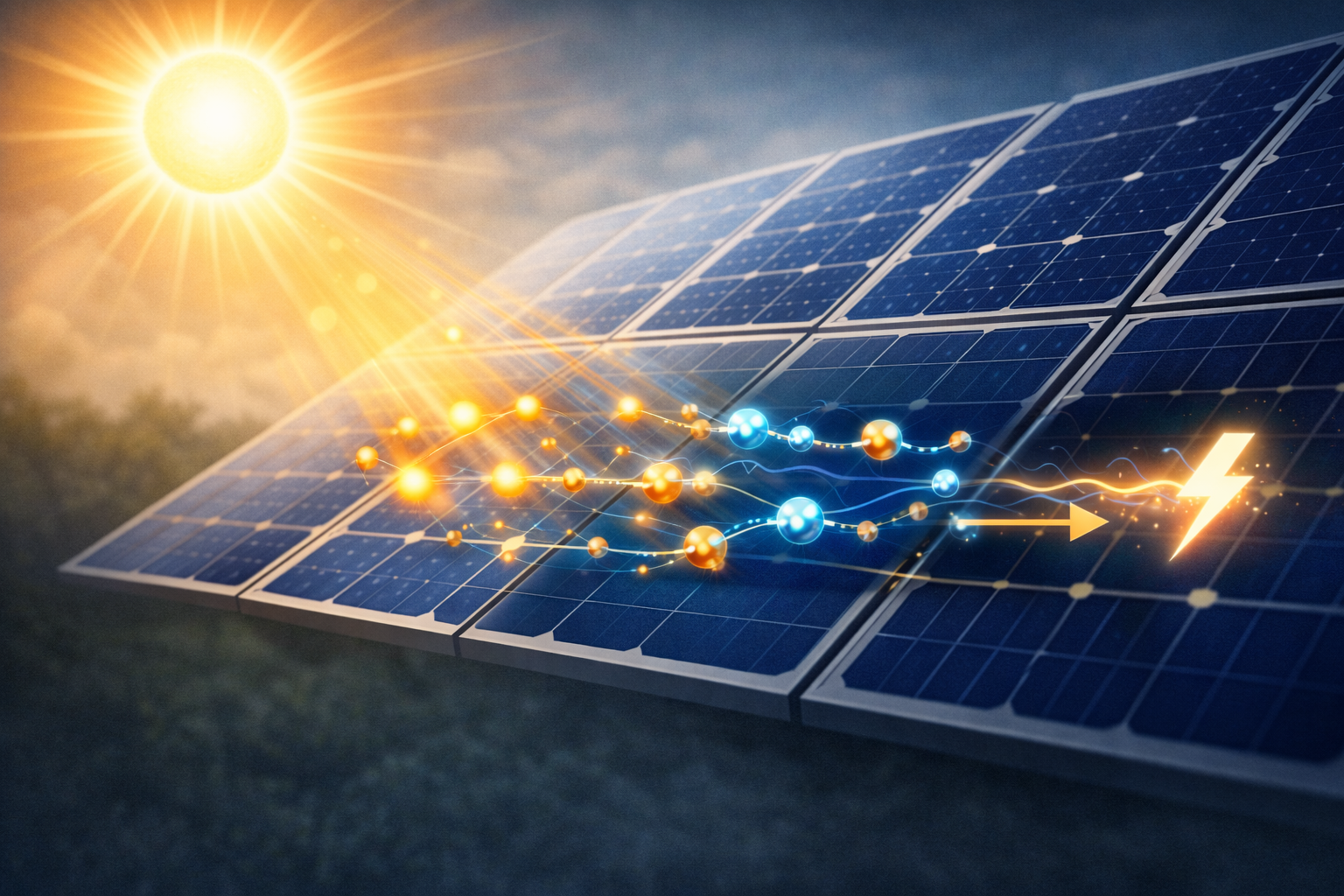
This is where everything comes together.
Each solar panel is made up of smaller pieces called solar cells.
These cells are made from a special material that reacts when sunlight hits it.
Here’s the process:
Sunlight hits the cell
Some of it is absorbed
The energy knocks electrons loose
Those electrons begin to move
That movement creates electricity.
A Simple Way to Picture It
Imagine a row of golf balls sitting still.
Now imagine hitting them with a club.
They scatter and start moving.
That’s what photons do to electrons. And moving electrons are what create electricity.
Inside the cell, everything is designed to guide those electrons in one direction—creating a steady, controlled flow.
That repeatable process is a big reason solar is so dependable.
How Electricity Flows
Once electrons are moving, you have an electrical current.
Think of it like water flowing through a pipe:
No movement = no energy
Steady flow = usable power
Solar panels create that steady flow without moving parts, which helps them operate reliably over long periods of time.
How Panels Power Your Home
One solar cell produces a small amount of power—about ~5 watts.
So we build systems:
Many cells → one panel
Many panels → a full system (array)
Think of it like a team:
One player can’t do much
A full team working together delivers consistent results
Your system is designed to match your home’s needs and produce energy in a steady, predictable way.
DC vs AC Power (Quick and Simple)
Solar panels produce DC (direct current) electricity.
Your home uses AC (alternating current) electricity – same type of electricity delivered by local power plant.
So we use an inverter to convert it.
Think of it like a translator:
Panels → DC
Home → AC
Inverter → makes it usable
This conversion happens automatically and reliably every day.
Why Sun Direction Matters in Kansas
Solar panels work best when they face the sun directly.
In Manhattan and across central Kansas, panels are typically installed facing south.
That helps:
Capture more sunlight
Keep production consistent
Maximize long-term performance
Maximize value of each solar cell (module) (array)
With Kansas’ wide-open skies and strong sunlight, this setup supports reliable energy production year after year.
What Happens at Night or During Kansas Weather?
This is where reliability really matters.
Cloudy Days
Panels still produce electricity—just less of it.
Nighttime
Your home doesn’t lose power. It simply uses:
The grid, or
Stored energy (if you have batteries)
Most homes stay connected to the grid, so power is always available when needed.
Solar vs. Grid Reliability (A Simple Way to Think About It)
Traditional electricity depends entirely on the grid.
Solar adds another layer.
The grid relies on fuel prices and large systems
Solar produces energy right at your home
The sun rises every day, no matter what energy markets are doing
Solar doesn’t replace the grid—it reduces how much you rely on it.
For many homeowners, that means more stability and less worry about rising energy costs over time.
A Quick Note on Solar Efficiency
Solar panels convert about 15% to 25% of sunlight into electricity.
That might sound low, but here’s what matters:
Kansas has strong, consistent sunlight
Systems are designed for your home’s usage
Output is predictable over time
Relevant measure for most homeowners is roof power density (W/SF) - most roofs are large enough to support systems that match homeowner usage
So what you get is reliable, measurable energy production you can plan around.
How Long Do Solar Panels Last?
Most solar panels are built to last 25 years or more.
And because they have no moving parts, there’s very little wear and tear compared to other home systems.
Over time, they may produce slightly less energy each year—but they’re designed to keep working consistently for decades-well past warranty period.
That long lifespan is a big part of what makes solar a reliable investment for homeowners.
How It All Fits Together (Quick Visual)
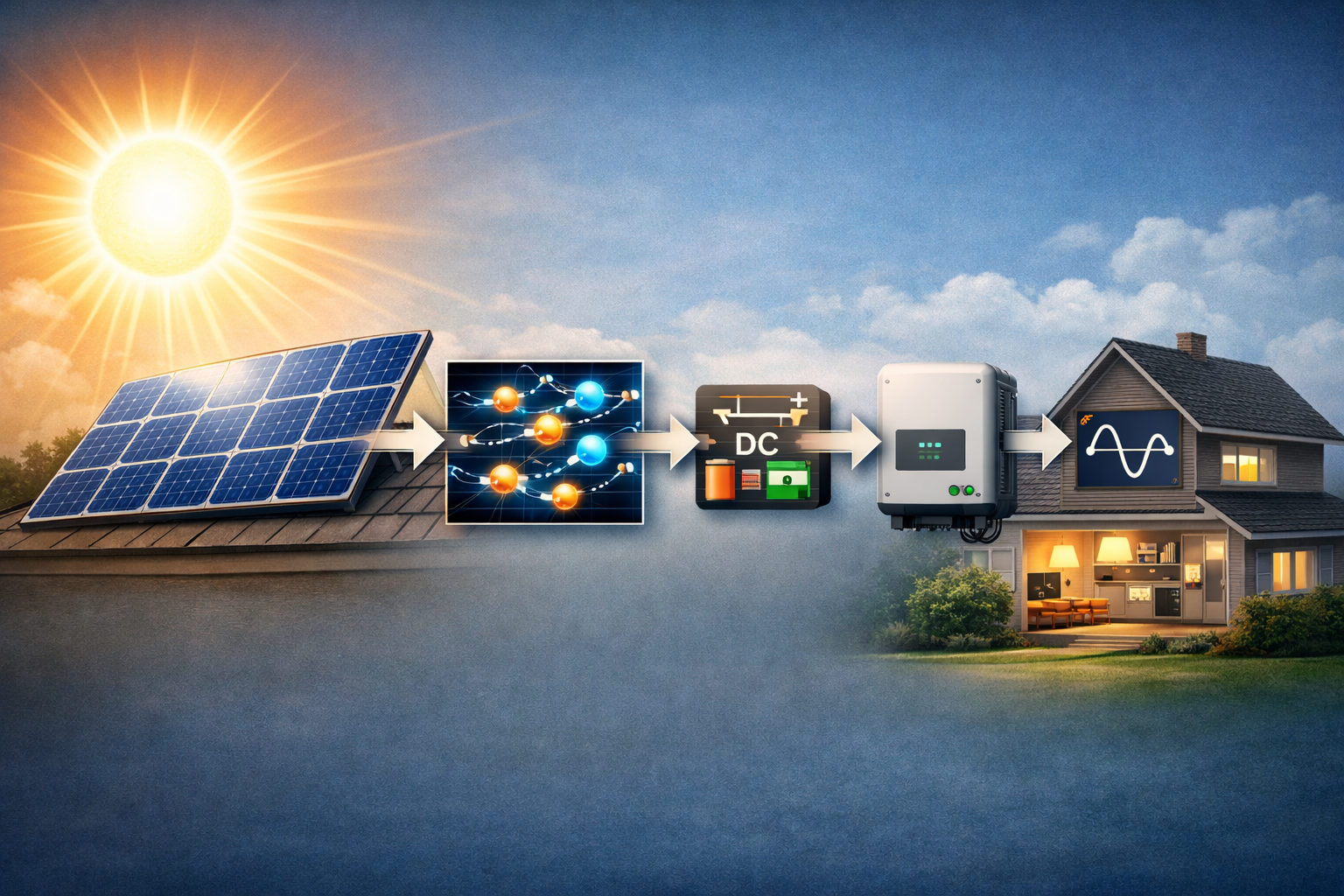
Sunlight → Solar Panels → Electrons Move → Electricity (DC) → Inverter → Usable Power (AC) → Your Home
It’s a simple, repeatable process—and it happens automatically every day.
Bringing It All Together
Here’s the simple version:
Sunlight carries energy (photons)
Solar cells capture that energy
Electrons get knocked loose and start moving
Moving electrons create electricity
That electricity is converted for your home
And it all happens quietly, safely, and reliably—day after day.
Frequently Asked Questions
Are solar panels reliable long-term?
Yes. They’re designed to produce power for decades with minimal maintenance.
How long do solar panels last?
Most systems are built to last 25+ years with steady performance over time.
Do solar panels work in Kansas winters?
Yes. Cold temperatures can actually help performance. Snow usually melts off quickly.
Do solar panels work on cloudy days?
Yes—just at reduced output.
What happens if the grid goes down?
Standard systems shut off for safety, but battery-backed systems can continue powering parts of your home.
A Final Thought
Solar isn’t just about producing energy—it’s about having a reliable, predictable source of power you understand and can count on.
And once you see how it works, it becomes clear: this isn’t experimental technology. It’s a proven system built to perform consistently for years to come.
If you’re exploring solar in Manhattan or the surrounding areas, Weddle & Sons is always here as a resource—no pressure, just clear, practical guidance.
Check out a deeper dive into solar panel technology here: https://www.energy.gov/cmei/systems/how-does-solar-work